




 Hockey sticks are made from non-recyclable materials, and broken or discarded sticks will end up in landfills.
Rink2Reef® recycles these otherwise useless sticks to create habitats for oysters along with other filter-feeding aquatic organisms that remove pollutants and excessive nutrients from creeks, rivers and estuaries.
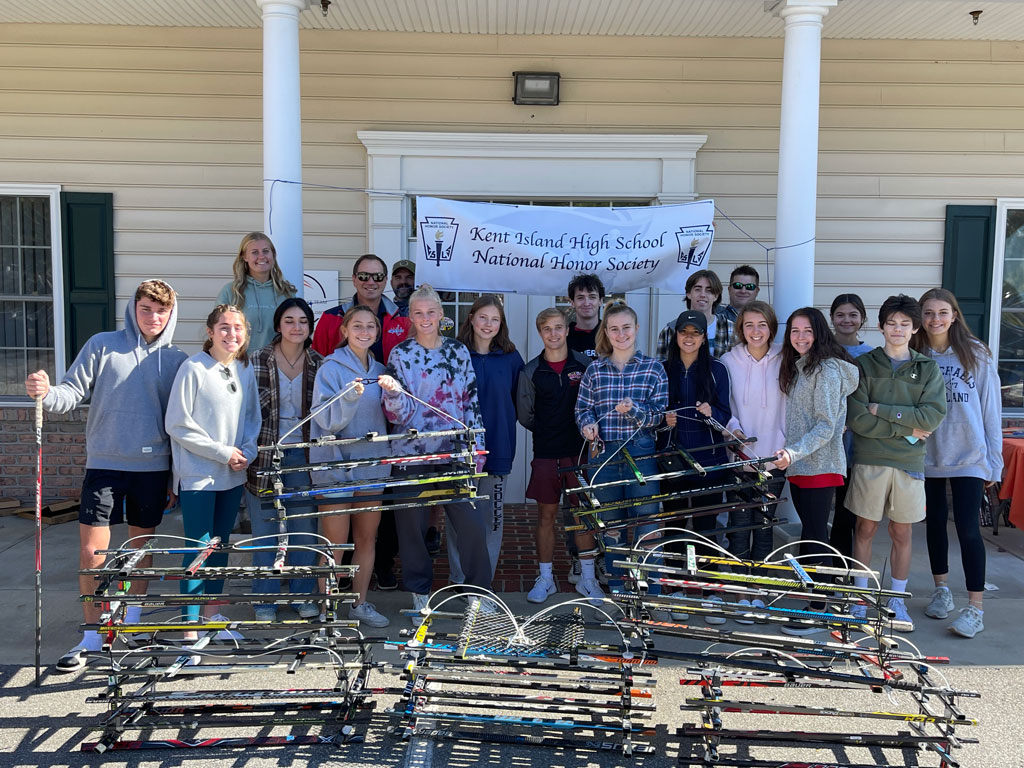
Sticks are measured, cut and constructed into stackable style reefs held together by thick monofilament fishing line. The structure allows a surface for oyster larvae, called spat, to attach and grow into mature oysters
With the reefs suspended in the water, growing oysters have access to food passing by like plankton while filtering nutrients and pollutants. One single adult oyster can filter up to 50 gallons per day.
Hockey sticks are made from non-recyclable materials, and broken or discarded sticks will end up in landfills.
Rink2Reef® recycles these otherwise useless sticks to create habitats for oysters along with other filter-feeding aquatic organisms that remove pollutants and excessive nutrients from creeks, rivers and estuaries.
Sticks are measured, cut and constructed into stackable style reefs held together by thick monofilament fishing line. The structure allows a surface for oyster larvae, called spat, to attach and grow into mature oysters
With the reefs suspended in the water, growing oysters have access to food passing by like plankton while filtering nutrients and pollutants. One single adult oyster can filter up to 50 gallons per day.